PRIVATE TOURS OF KOTOR & ALL AROUND MONTENEGRO
  • ABOUT US
    • 2024 Guest Reviews
    • Our Team >
      • Photo Gallery
      • Our Boats
      • Our vehicles
      • Other Services
      • Customized your tour
      • Our terms and conditions
      • Contact us
      • Guests Reviews through the years >
        • 2023 Guest Reviews
        • 2022 Guests reviews
        • 2019 Guests reviews
        • 2018 Guests reviews
        • 2017 Guest reviews
        • 2016 Guests reviews
        • 2015 Guest reviews
        • 2014 Guests reviews and comments
        • 2013 Guests reviews and comments
        • Leave your review!
    • Top Destinations in Montenegro >
      • Our Lady Of The Rocks Island
      • Perast
      • Budva
      • Blue Cave
      • Herceg Novi
      • Njegusi
      • Kotor
      • National Parks
    • Montenegro >
      • History of Montenegro
      • National Parks >
        • Biogradska Gora Nat. Park
        • Durmitor National Park
        • Prokletije National Park
        • Skadar Lake National Park
        • Lovcen National Park
    • Our Blog
  • Experiences
    • Sailing session in the Bay
    • Olive farm to fork experience
    • Oysters and Mussels farm experience
    • Prosciutto smokehouse farm to table experience
    • Food, wine and Kotor Old Town Private walking
    • Winery Food and wine tour at Storia di Pietra
    • Private cooking class and walking tour of Kotor
    • Food and wine tour at Savina Winery
    • Hike the Bay of Kotor and Montenegro with us
    • Kotor Old Town, Private walking city tour
  • Full day Tours
    • "Ultimate Best tour of our Coastline" by speedboat and auto
    • "Over the top Best of our Coastline" by speed boat and auto
    • "Best of our Coastline" by car
    • Skadar Lake Full day tour
    • Day Private Shore Excursion Kotor Njegusi Mount Lovcen Kotor
    • Full day Private and customized speedboat tour of the Bay of Kotor
    • "Coast and Lovcen Mountain" Budva Lovcen Njegusi and Kotor
    • "Coast and inland Montenegro"
  • Half Day Tours
    • Private Speed Boat Excursion Kotor Our Lady of the Rocks Perast
    • Private tour Kotor and cable car
    • Private Speed Boat tour Kotor - Blue Cave - Kotor
    • Private shore excursion Kotor Njegusi Cetinje
    • Private shore excursion Kotor Njegusi
    • Private shore excursion Kotor Perast Our Lady of the Rocks
    • Private Shore excursion Kotor Sveti Stefan Budva

RSS Feed

What to do in Montenegro

Churches in Kotor

1/28/2022

0 Comments


​

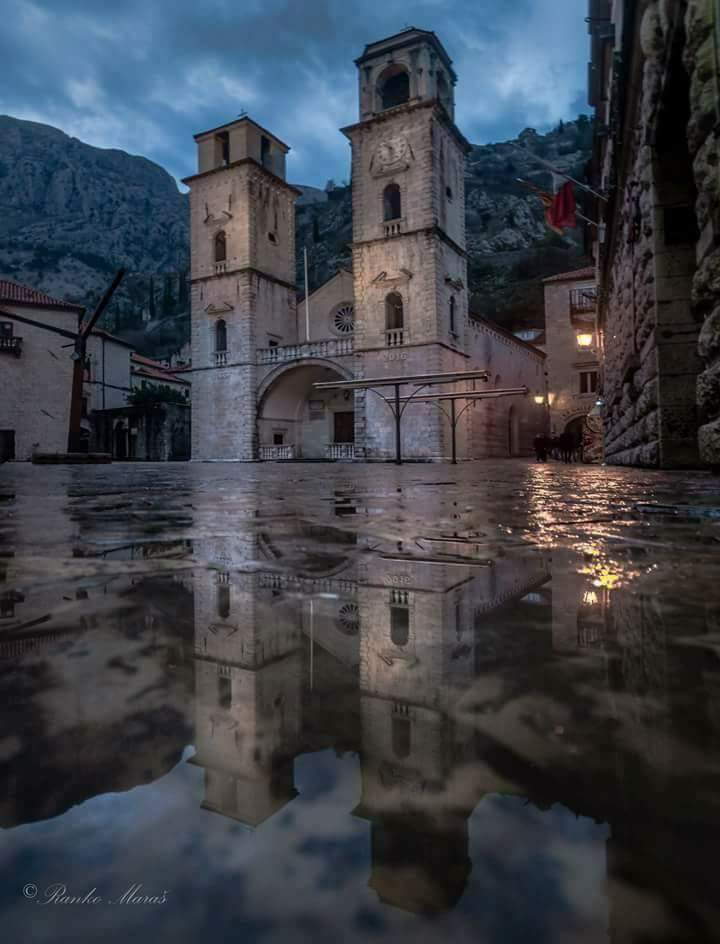
​Cathedral Of Saint Tryphon

​
It all began in the year 809, when relics of Saint Tryphon arrived a saint who died in martyrdom in the era of the Roman emperor Decije, legend says that the original plan was to ship the relics to Dubrovnik however the voyage encountered stormy seas and the embarkation changed its course arriving in Kotor. On the site of today’s Cathedral, there was a much smaller church where the relics were stored.
The chroniclers testify that that temple most probably disappeared in the fire, in the X century, and as the economy of Kotor flourished, locals wanted to create something more impressive for their patron saint so the construction began in the XII century. The cathedral of St. Tryphon was built in the Romanic style, with the elements of the Byzantium architecture. It survived several earthquakes, so its appearance also changed. Especially visible on the cathedral are the elements of renascence and baroque. It was not simply a religious object, standing vastly in the heart of the Old Town of Kotor. It also showed every sailor that came to Kotor that this town may be small in size, but with the achievements of its people, it was as great as any bigger town in Europe!
Unfortunately, this area is prone to earthquakes, so the Cathedral was not left out of it. It was damaged few times, especially with the one in 1667, when both bell towers collapsed. The most recent, in 1979, also caused some damage, but the cathedral, as well as the Old Town of Kotor, was completely restored and is standing proudly for all visitors who will certainly admire it exterior beauty and it is open for those who are willing to peek inside this extraordinary monument.
European Union and organization Europa Nostra, gave in the year 2002 to the cathedral a diploma for the great reconstruction and great seismic security measures of the oldest Romanic cathedral on the Adriatic coast. As the most important monument and symbol of the Old town, the cathedral of St. Tryphon, possess a rich treasury of the precious items among which we have: a gilded altar, baroque frescoes, and a great number of ornaments of great value. 
Picture

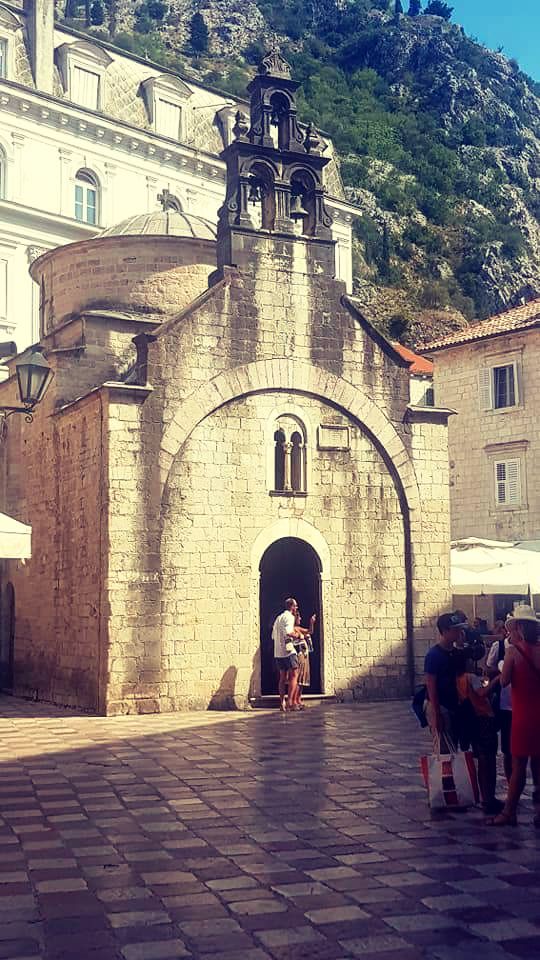
Saint Luke Church

​
The church of Sveti Luka is also situated in the old town and it deserves a special mention since it represents the harmony and togetherness of the citizens of Kotor and Montenegro. It was built during the reign of the Serbian dynasty Nemanjic, at the en of the XII century.

Until the middle of the XVII century the church of Sveti Luka was a catholic temple however the number of Orthodox people in Kotor increased after the war with the Turks and it became an Orthodox. Catholic believers had their altar in that temple as well until the first half of the XIX century, during almost two centuries this church hold two altars and to its present day it holds a special place in the hearts of the locals because it remind us that both Roman Catholics and Christian Orthodox believers could pray together in despite of their differences.
​
Once you visit the interior of the church you will notice the floor  consists of tombstones of the common tombs of the people of Kotor, because until the thirties of the 20th century, burials were performed in the church itself.
Picture

Saint Nicholas Church​ 
​

​The church of St Nicholas is the most significant Orthodox Church in Kotor. It is located in the North part of the town; the construction of the church began in 1902 after the area was given to the Orthodox by the French in 1810, it was built on the basis of and old Dominican Monastery from the 16thcentury which was ruined by fire towards the end of the 19thcentury.  
The church was completed in 1909 and printed on the front of the building where we can see it today. Built in the Byzantine style, with only one nave and two bell towers on the main façade, the church is also visible behind the large city wall, which is located directly next to it.
The interior of the church fills a space that impresses with its richness and beauty of the iconostasis completed in 1908.
The Church of Saint Nicholas is known for its large collection of icons, the most famous of which is the Icon of the Holy Mother of God Trojerucica. The church keeps many religious documents and books, works of art, clothing and other valuables, which were donated to the church, mostly by rich Kotor families.
The Church of St. Nicholas is the only Orthodox church in Kotor, where services are held daily. The flag of the Serbian Orthodox Church hangs from the front façade
It is believed that in Kotor in the period from the 13th to the 20th century there were about 50 churches that disappeared due to different causes, mostly during the catastrophic earthquakes of 1667 and 1979.
Of the remaining churches, a few of them hold regular services however many have lost their original purpose.

St. Mary of the River of St. Mary’s Collegiate, is considered one of the oldest churches in Kotor. However, the present building dates back to 1221 built on the remains of an early Christian Basilica from the 5th 6th century.

St. Claire church dates back to the 17th century with a gorgeous marble altar from the 18th century and excellent work by Francesco Cabianca. Next to the church we will find access to Saint Claire’s convent as well as the remains of the old St. Bartolome’s church from the 14th century. Today the church has been divided in a convent and a Franciscan monastery with a rich library holding thousands of books including 100 incunabula.

St. Anne, is a Romanesque church from the 12th century however underwent unusual works during the 19th century especially in the facades, which where completely plastered hiding its nice hewn stone. Only during the aftermath of the earthquake, the church regained its original appearance.

St. Michael church, the Romano – Gothic church erected at the end of the 13th or at the beginning of the 14th century. It was constructed on the foundations of an early Romanesque church, which came to be mentioned in the Charter of the consecration of St. Tryphon’s Cathedral from 1166. Located in a small square in the middle of the city where we can also find one the few trees inside the walls of Kotor, a 300 years old Poplar tree planted after the 1667 earthquake, the small church turned into a lapidary.

Our Lady of the Remedy or Lady of the Health became a votive church after one of the many plague epidemics is Kotor.  build during the 16th century in the middle of the ascent to St. John’s fortress after.
The Church of the Holy Spirit now there is a concert hall of the Kotor Music School. In the past it also had an orphanage that was turned into a seminary at the end of the 19th century, and after the WWI into the Hotel Graz.

St. Joseph’s, Baroque church was originally built over a church that was probably dedicated to St. Mary Magdalene, it is interesting that the wall of the church next to the stairs leading to the church belonged to the monastery that was demolished when the prison was built, so the windows on that wall remained facing the interior of the church. work of Francesca Cabianca. It should be noted that in the bell tower of St. Josip finds the oldest bell in Kotor cast in Venice in 1461, transferred from the old monastery of St. Francis near Gurdić entrance endowment of Queen Jelena of Anzujska. After some years it was used as a school for young girls who could not attend the grammar school.

St. Paul’s church used to be completely hidden by a high wall, so that it was only the Romano-Gothic portal that was indicating the existence of significant architecture. Pavle Bari a citizen of Kotor had the church had the church built in 1263. When the Church was turned into barracks during Napoleon’s occupation (1807-1814) its interior was divided in two levels by means of the floor system, so that the original character of a homogenous space completely disappeared. During Italian occupation in the World War II, it was turned into prison, while during the Cominform and the conflict between Tito and Stalin in 1948, this edifice became female prison, so called Little Prison.
​
The excavations that were carried out in the narrow courtyard in between the western wall of the Church and the high Street wall uncovered that the 13th century church had been accessed from the lower level of the present-day street via a two-flight stairway. Underneath the stairway there was an arcosolium, within the niche of which there was a built-in sarcophagus, possibly the grave of the founder of the older church. This invaluable edifice was revitalized and adapted as a single exhibition museum space for the rich collection of stone monuments from the Town Lapidarium, and/or multi-purpose space for exhibitions, concerts, scientific meetings etc.
0 Comments

Your comment will be posted after it is approved.


Leave a Reply.

    Author

    Archives

    March 2022
    January 2022

    Categories

    All
    Kotor

    RSS Feed

 lET US  SHOW  YOU THE BEAUTY OF MONTENEGRO 


Follow us on IG
Our Tours
  • ABOUT US
    • 2024 Guest Reviews
    • Our Team >
      • Photo Gallery
      • Our Boats
      • Our vehicles
      • Other Services
      • Customized your tour
      • Our terms and conditions
      • Contact us
      • Guests Reviews through the years >
        • 2023 Guest Reviews
        • 2022 Guests reviews
        • 2019 Guests reviews
        • 2018 Guests reviews
        • 2017 Guest reviews
        • 2016 Guests reviews
        • 2015 Guest reviews
        • 2014 Guests reviews and comments
        • 2013 Guests reviews and comments
        • Leave your review!
    • Top Destinations in Montenegro >
      • Our Lady Of The Rocks Island
      • Perast
      • Budva
      • Blue Cave
      • Herceg Novi
      • Njegusi
      • Kotor
      • National Parks
    • Montenegro >
      • History of Montenegro
      • National Parks >
        • Biogradska Gora Nat. Park
        • Durmitor National Park
        • Prokletije National Park
        • Skadar Lake National Park
        • Lovcen National Park
    • Our Blog
  • Experiences
    • Sailing session in the Bay
    • Olive farm to fork experience
    • Oysters and Mussels farm experience
    • Prosciutto smokehouse farm to table experience
    • Food, wine and Kotor Old Town Private walking
    • Winery Food and wine tour at Storia di Pietra
    • Private cooking class and walking tour of Kotor
    • Food and wine tour at Savina Winery
    • Hike the Bay of Kotor and Montenegro with us
    • Kotor Old Town, Private walking city tour
  • Full day Tours
    • "Ultimate Best tour of our Coastline" by speedboat and auto
    • "Over the top Best of our Coastline" by speed boat and auto
    • "Best of our Coastline" by car
    • Skadar Lake Full day tour
    • Day Private Shore Excursion Kotor Njegusi Mount Lovcen Kotor
    • Full day Private and customized speedboat tour of the Bay of Kotor
    • "Coast and Lovcen Mountain" Budva Lovcen Njegusi and Kotor
    • "Coast and inland Montenegro"
  • Half Day Tours
    • Private Speed Boat Excursion Kotor Our Lady of the Rocks Perast
    • Private tour Kotor and cable car
    • Private Speed Boat tour Kotor - Blue Cave - Kotor
    • Private shore excursion Kotor Njegusi Cetinje
    • Private shore excursion Kotor Njegusi
    • Private shore excursion Kotor Perast Our Lady of the Rocks
    • Private Shore excursion Kotor Sveti Stefan Budva